
How to Choose Hemp-Derived THC Gummies: A UX Designer’s Buying Guide
Shopping for legal THC edibles shouldn’t feel like navigating a minefield, yet the hemp-derived THC gummy market in 2026 remains fragmented, inconsistent, and frankly overwhelming for most buyers. The best approach is to evaluate products through a user experience lens: clarity of labeling, transparency of effects, consistency of dosing, and trustworthiness of the brand. These aren’t just design principles. They’re the difference between a confident purchase and buyer’s remorse.
I’ve spent years analyzing how people interact with products, and the same heuristics that guide good software design apply perfectly here. When a gummy brand obscures its dosage or buries third-party lab results five clicks deep, that’s a red flag. When packaging clearly states cannabinoid content, onset time, and expected duration, you’re dealing with a company that respects your time and safety.
The legal patchwork around hemp-derived THC compounds like Delta-8, Delta-9, and THC-O means regulation is sparse and quality varies wildly. Without FDA oversight, the burden of evaluation falls entirely on you. That’s why framing your search through UX principles works so well: good user experience is a proxy for good manufacturing practices. Brands that invest in clear communication typically invest in clean ingredients, reliable testing, and consistent batches.
This guide walks you through the key factors that separate trustworthy products from questionable ones, compares the main types available, highlights top recommendations, and flags common purchasing mistakes. You’ll leave with a framework for confident decision-making in an industry that desperately needs more clarity.
Why User Experience Matters When Buying THC Gummies
When I first tried buying hemp-derived THC gummies online, I stared at a product page for ten minutes, genuinely unsure whether each gummy contained 5mg or 50mg of Delta-9 THC. The label showed three different numbers, the packaging photo was blurry, and the description contradicted itself. I closed the tab and went elsewhere, a textbook example of UX friction causing direct business loss.
This experience crystallized something important: the principles behind a good UX strategy apply just as much to physical product design as they do to apps and websites. When you’re selecting a consumable that affects your body and mind, unclear information isn’t just annoying, it’s a safety issue. Poor packaging design creates cognitive load at exactly the moment when clarity matters most: before consumption.
Consider two real contrasts I’ve encountered. One brand uses a clean hierarchy on their packaging, cannabinoid content in large type, clear “per gummy” callouts, and a QR code linking directly to that batch’s lab results. Opening the package, you find individually-wrapped gummies with dosing repeated on each wrapper. Compare that to another product: a generic mylar bag with tiny, dense text listing multiple cannabinoids without specifying which is dominant, no batch information, and gummies that all look identical despite containing different formulations.
The first brand treats product design as an extension of user experience. The second treats it as an afterthought, creating confusion that could lead someone to take the wrong dose or lose trust entirely. When regulations are still developing and the market is crowded with new entrants, user-centered design becomes your most reliable filter for identifying products worth considering.
What to Look for: Essential Buying Factors
Clarity of Dosing Information

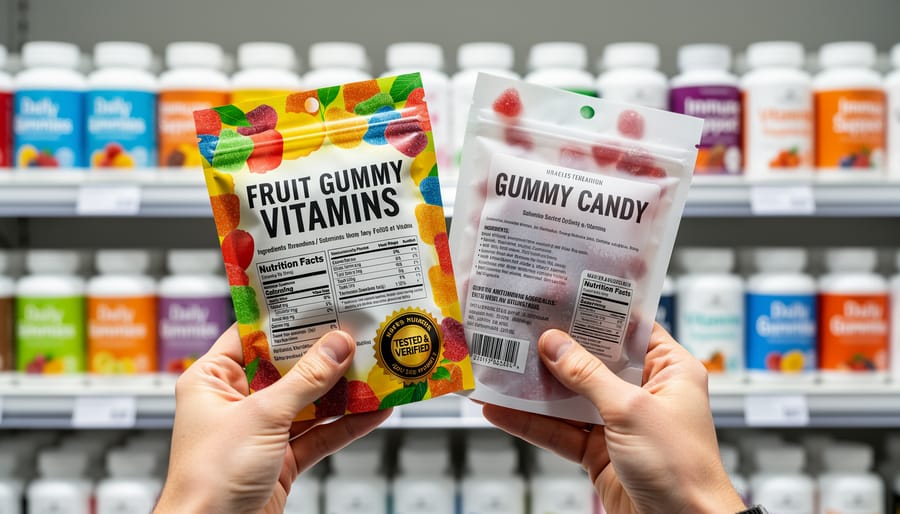
Dosing information is your most critical decision point, and it’s where too many brands fail their users. A well-designed label tells you exactly how much THC you’re getting per gummy and per container, no hunting, no math required. Look for products that state total milligrams of Delta-9 THC (or Delta-8, if applicable) prominently on the front panel, then clearly break down the per-serving amount. The best labels use visual hierarchy and typography clarity to make these numbers impossible to miss.
Red flags? Vague language like “contains THC” without specific milligram counts, or labels that bury dosing details in tiny print on the back. Missing cannabinoid profiles, where you can’t tell if you’re getting pure Delta-9, a blend, or trace amounts of CBD, should stop you cold. I once compared two brands side-by-side: one displayed “5mg Delta-9 THC per gummy” in bold with a graphic showing the serving size, while the other listed only “50mg total cannabinoids” with no breakdown. That second label forced me to dig through their website to learn each gummy contained 2.5mg THC and 2.5mg CBD, information that should’ve been obvious from the start.
Packaging Design and Information Architecture
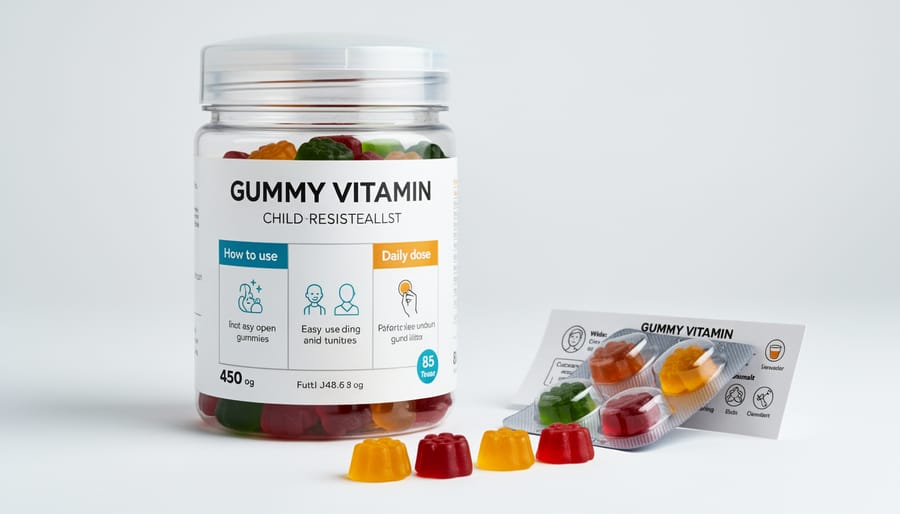
Effective packaging does more than protect gummies, it guides you through every interaction with the product. Start by checking whether critical information follows a clear visual hierarchy. The most important details (dosing, THC content, warnings) should stand out immediately, while secondary information like ingredients or storage instructions occupies less prominent space. If you’re squinting to find the milligram count or flipping the package three times to locate allergen warnings, the design has failed.
Scanability matters when you need quick answers. Well-designed packages use headings, bullet points, and whitespace to let you absorb key facts in seconds. Look for packages that separate “per gummy” and “per container” dosing with distinct typography, mixing these on a crowded label creates dangerous confusion.
Child safety isn’t negotiable. Quality brands meet the child-resistant packaging requirement with mechanisms that actually work without frustrating adult users. Push-and-turn caps or ziplock seals that need two-step activation strike this balance.
Resealability extends product freshness and signals thoughtful design. Smell-proof, airtight packaging with a proper seal shows a brand understands real-world use. If the package tears open with no way to close it properly, you’re left improvising storage, a UX oversight that affects product quality and safety.
Third-Party Testing and Trust Signals

Third-party lab testing isn’t just a regulatory checkbox, it’s a core UX element that either builds buyer confidence or leaves you guessing. The best brands treat their Certificates of Analysis (COAs) as user-facing documents, not buried compliance paperwork.
Look for QR codes printed directly on the package that link to batch-specific lab results. I’ve scanned dozens of these, and the difference is stark: good ones load quickly, display results in plain language with clear pass/fail indicators for potency and contaminants, and include the test date. Poor implementations dump you on a generic homepage or serve up a scanned PDF with tiny text and lab jargon.
Batch numbers matter more than most buyers realize. They let you verify that the COA matches your actual product, not just some representative sample. If a brand doesn’t print batch numbers prominently or makes you email customer service to get results, that’s friction signaling they don’t prioritize transparency.
User-friendly lab results translate cannabinoid levels into simple terms, flag any detected pesticides or heavy metals, and include a lab logo you can verify independently. When a brand makes this information genuinely accessible, not technically available, they’re demonstrating respect for your decision-making process and your safety.
Ingredient Transparency and Allergen Information
When I’m scanning a product’s ingredient list, I’m looking for two things: honesty and clarity. A good ingredient panel doesn’t hide behind “proprietary blend” language or bury the important stuff in microscopic type. You should see every cannabinoid clearly identified with exact milligram amounts, plus a full breakdown of what else is in that gummy.
Watch out for vague descriptors like “natural flavors” or “plant-based ingredients” without specifics. These phrases often mask cheap fillers or allergens. The best products list everything plainly: which sweeteners they use, what creates the texture, where the flavor comes from. If you have dietary restrictions or allergies, this transparency isn’t optional.
Common allergens deserve special attention. Gelatin-based gummies aren’t vegan, and many contain tree nut-derived ingredients or are processed alongside soy. A user-friendly product calls these out prominently, not in fine print. I’ve seen brands bury “contains coconut” three lines from the bottom in 6-point font, which creates real risk for allergic users.
If a brand makes you work hard to understand what you’re actually consuming, that’s a design failure and a trust issue. Move on to one that respects your need to know.
Brand Reputation and Customer Experience Signals
A brand’s commitment to user experience reveals itself long before you open a package. Start by exploring how they handle questions, does their website bury contact information, or do they offer live chat, email, and a real phone number? I once compared two hemp brands: one answered my dosing question within an hour with helpful detail, while the other auto-replied and never followed up. That responsiveness gap told me everything about their priorities.
Look for educational content that goes beyond marketing fluff. Quality brands publish dosing guides, explain their extraction methods, and answer common concerns without trying to upsell you. Check their return policy, vague language or buried fine print suggests they don’t stand behind their products.
User reviews deserve careful reading. Red flags include repeated complaints about inconsistent effects (poor quality control), responses from the brand that deflect rather than help, or patterns of packaging that arrives damaged. Pay attention to how the company responds to criticism. Defensive, generic replies signal a brand that views customers as transactions rather than people they’re serving.
Types of Hemp-Derived THC Gummies Compared
When you’re shopping for hemp-derived THC gummies, you’ll encounter three main categories, each designed for different experiences and user needs. Understanding these distinctions helps you evaluate products more effectively and know what to look for on labels and packaging.
Delta-9 THC gummies contain the primary psychoactive compound found in cannabis, now legal in hemp-derived form when they contain no more than 0.3% Delta-9 THC by dry weight. These products typically deliver the most familiar cannabis experience. From a UX perspective, Delta-9 products should provide the clearest dosing guidance since effects can be potent. Look for packaging that prominently displays milligrams per serving (often 5-10mg for beginners, up to 25mg for experienced users) and includes clear onset time expectations. The best Delta-9 gummy experiences come from brands that don’t bury this critical information in fine print.
Delta-8 THC gummies offer a milder, often smoother experience. This cannabinoid occurs naturally in hemp but is usually synthesized from CBD, which introduces important quality considerations. Delta-8 users report less anxiety and a clearer headspace compared to Delta-9, making these products popular with newcomers. However, because Delta-8 is synthesized, third-party testing becomes even more critical. The UX red flag here is vague language about sourcing or conversion processes. Trustworthy brands explain their production method and make lab results easily accessible, often with QR codes directly on the package.
Blended cannabinoid gummies combine multiple compounds like CBD, CBG, CBN, or various THC isomers to create specific effects. You might see formulations marketed for sleep, focus, or balanced relaxation. These products demand the most sophisticated information architecture because users need to understand not just total THC content, but the ratios and synergies between cannabinoids. A well-designed blended product clearly explains what each cannabinoid contributes and why they’re combined.
| Type | Typical Use Case | Key UX Considerations | What to Prioritize |
|---|---|---|---|
| Delta-9 THC | Traditional cannabis experience, relaxation, sleep support | Clear mg-per-serving display, onset time guidance, effect intensity indicators | Precise dosing information, beginner-friendly starting doses |
| Delta-8 THC | Milder effects, daytime use, anxiety-conscious users | Transparent sourcing info, accessible COAs, conversion process clarity | Third-party testing verification, production method transparency |
| Blended Cannabinoid | Targeted effects (sleep, focus, balance), customized experiences | Ratio explanations, ingredient synergy info, clear effect profiles | Educational content about each cannabinoid, well-organized ingredient hierarchy |
The product type you choose should align with your experience level and intended use, but regardless of category, the UX fundamentals remain the same. Each type presents unique information-design challenges, and the brands that solve these challenges make your job as a buyer significantly easier and safer.
How to Evaluate Product Listings and Brand Websites
When you land on a product page for hemp-derived THC gummies, you’re not just shopping, you’re conducting a quick usability audit. The best way to approach this is with the same critical eye you’d apply to goal-based critique in a design review: what is this page trying to help me accomplish, and does it actually deliver?
Start by scanning for the essential information hierarchy. A well-designed product page should answer your core questions within seconds, not minutes of hunting. Your eyes should naturally flow from product name and dosing to ingredients, lab results, and purchase details without frustration. If you’re scrolling endlessly or clicking through multiple tabs just to find basic cannabinoid content, that’s a red flag about both the product and the brand’s priorities.
Use this mental checklist as you evaluate any listing:
- Is the exact THC content per gummy stated clearly near the product name?
- Can I access third-party lab results with two clicks or less?
- Are the full ingredients listed on the page, not just in a downloadable PDF?
- Is there a visible return or satisfaction guarantee policy?
- Does the site explain what type of THC this product contains (Delta-9, Delta-8, etc.)?
- Are customer service contact options easy to locate?
- Do product photos show the actual label with readable text?
These fundamentals mirror the ecommerce UX steps that trustworthy brands follow. If answers are buried in FAQ accordions or absent entirely, move on.
I recently compared two competing brands. Brand A featured a clean product page with dosing front-and-center, a QR code linking directly to batch-specific COAs, and ingredient callouts for common allergens. Brand B had flashy graphics but required me to download a PDF to see ingredients and offered only generic lab results from six months prior. Brand A understood that transparency is a feature; Brand B treated it as an afterthought. The choice was obvious.
Pay attention to how a brand handles questions in their copy. Defensive or vague language around sourcing, testing frequency, or ingredient origins suggests they’re hiding something. Confident brands answer questions you didn’t know to ask.
Recommendations: What Makes a Product User-Friendly
A user-friendly hemp-derived THC gummy creates confidence at every touchpoint. The best products aren’t just effective, they anticipate questions, reduce anxiety, and make the entire experience feel accessible and safe.
For beginners, the ideal product acts as a gentle guide. Look for gummies with conservative dosing (2.5-5mg per piece), packaging that clearly explains onset time and duration, and brands that include beginner-specific instructions. The information hierarchy should surface what matters most: how much to take, how long to wait, and what to expect. Brands practicing co-design principles often excel here because they’ve involved actual users in shaping the experience. Child-resistant packaging that’s still easy for adults to open, resealable containers that maintain freshness, and QR codes linking to batch-specific lab results all signal user-centered thinking.
Experienced users have different priorities. They benefit from products offering precise cannabinoid ratios, higher-dose options that reduce the number of pieces needed, and detailed terpene profiles. The best products for this group provide granular control, think packaging that allows you to see individual gummies without opening, or brands that offer sampler packs so you can test formulations before committing to larger quantities.
For wellness-focused buyers, transparency around minor cannabinoids (CBD, CBG, CBN) and natural ingredients matters most. Seek out brands that explain their ingredient choices, provide sourcing details, and frame effects in functional terms rather than recreational hype. Clean, minimal packaging design often correlates with this approach, though substance should never be sacrificed for style.
Recreational users typically want consistency and convenience. Products with predictable effects, portable packaging, and flavor profiles that feel like a treat rather than medicine fit this persona. User-friendly recreational products don’t oversell or use aggressive marketing, they let quality and experience speak for themselves.
Common Mistakes to Avoid
I’ve watched too many people get burned by preventable mistakes in this market. Last year, a friend showed me a bottle of gummies she’d bought at a gas station, the packaging looked professional, almost pharmaceutical, but the actual dosing information was buried in tiny print on the back, and there was no COA in sight. She’d assumed the slick design meant quality control. It didn’t.
Here are the most common pitfalls I see buyers fall into:
- Choosing products based on packaging aesthetics alone, without verifying what’s actually inside
- Ignoring or misunderstanding dosing information because the label design makes it hard to parse
- Skipping the step of checking for third-party lab results or assuming they exist without confirming
- Not reading return policies or customer service terms before purchasing, especially for first-time orders
- Treating all hemp-derived THC products as interchangeable without understanding cannabinoid differences
The flashy packaging trap is particularly insidious because it exploits our natural bias toward visual appeal. A gradient foil bag with clean typography feels premium, but that’s pure interface, it tells you nothing about the product experience or safety. I’ve seen brands invest thousands in packaging design while using inconsistent dosing or questionable sourcing. The better approach is to treat packaging as one data point among many. Look at it, sure, but then immediately flip it over and read the fine print. Check if the batch number actually links to a real lab report. See if the customer service email is real or just a placeholder.
The dosing clarity mistake often stems from impatience. When you’re comparing five products side by side, it’s tempting to just grab the one with the nicest label and move on. But taking two extra minutes to verify whether “10mg per serving” means per gummy or per container can save you from a wildly unpleasant experience. If you have to guess what the dosing means, that’s a UX failure and a deal-breaker.
Frequently Asked Questions
How can I tell if a brand is actually reliable or just good at marketing?
Look beyond slick packaging for substance: accessible third-party lab results with QR codes or batch numbers, clear contact information with responsive customer service, and transparent ingredient sourcing. Reliable brands make it easy to verify their claims rather than hiding details behind vague promises.
What should I do if a product’s dosing information seems unclear or incomplete?
Don’t buy it. Unclear dosing is a red flag for poor manufacturing standards and creates real safety risks. A trustworthy product will specify exact milligrams of THC per gummy and per package, plus total cannabinoid content. If you have to guess, move on to a brand that respects your need for precision.
How do I compare dosing when different brands use different cannabinoid blends?
Focus on total THC milligrams per serving as your baseline, then check the cannabinoid profile breakdown. A product with 10mg Delta-9 THC will likely feel stronger than one with 10mg Delta-8, so you can’t compare them one-to-one. Start lower than you think you need when switching between cannabinoid types.
Is it better to buy hemp-derived THC gummies online or in a physical store?
Online shopping gives you more time to research lab results and read detailed product information without pressure, but physical stores let you examine packaging quality and ask staff questions directly. Either works if the retailer is reputable, though online purchases offer easier access to customer reviews and brand transparency materials.
Can I trust customer reviews when evaluating THC gummy products?
Reviews are useful for gauging real-world experience with effects, taste, and customer service, but read critically. Look for patterns across multiple reviews rather than isolated extremes, and prioritize comments about packaging clarity, dosing consistency, and how the brand handled any issues. Be skeptical of reviews that sound overly promotional or suspiciously uniform.
These questions come up repeatedly because the hemp-derived THC market still lacks the regulatory guardrails that force clarity and consistency. You’re essentially doing the quality control work that should be baked into the system. That’s frustrating, but it’s also why a UX-informed approach matters so much right now.
When product information feels incomplete or you’re stuck choosing between similar-looking options, trust your instincts. If a brand makes you work too hard to find basic facts about what you’re putting in your body, that’s a design failure and a business philosophy problem. The best products treat transparency as a baseline expectation, not a differentiator.
Good design isn’t about making a product look pretty, it’s about making it work for the people who use it. When I started applying UX principles to everyday purchases, I realized how much clearer my decisions became. Hemp-derived THC gummies are no exception. In this market, where regulations are still catching up and quality varies wildly, user-centered design becomes your safety net.
The products that get UX right don’t hide information behind marketing buzzwords. They make dosing unmistakable, testing results accessible, and ingredients transparent. They respect your time and your wellbeing. Choosing these products over their poorly-designed competitors isn’t picky, it’s smart.
As you evaluate options, remember that confusion is a design failure, not your fault. Demand clarity. Expect transparency. Walk away from brands that make you guess.
This same lens applies far beyond gummies. Every purchase is an interaction, and you deserve products designed with your needs in mind. If you found this approach useful, explore more UX insights throughout our site, we’re here to help you see the world through a designer’s eyes.